Choose a test user to login and take a site tour.
To continue using the site you need to read the revised version and agree to the policies
Search in Photos
Search in Albums
Search in Members
Search in Articles
Search in Blogs
Search in Businesses
Search in Events
Search in Groups
Search in Listings
Search in Music Albums
Search in Music Songs
Search in Pages
Search in Questions
Search in Quotes
Search in Recepies
Search in Thoughts
Search in Videos
Search in Channels
Search in Wishes
Search in Prayers
Search in Discussions
Search in Products
Search in Jobs
Search in Products
Search in Photos
Search in Albums
Search in Members
Search in Articles
Search in Blogs
Search in Businesses
Search in Events
Search in Groups
Search in Listings
Search in Music Albums
Search in Music Songs
Search in Pages
Search in Questions
Search in Quotes
Search in Recepies
Search in Thoughts
Search in Videos
Search in Channels
Search in Wishes
Search in Prayers
Search in Discussions
Search in Products
Search in Jobs
Search in Products
18 minutes, 21 seconds
-52 Views 0 Comments 0 Likes 0 Reviews
Every charity golf event has a moment that decides whether the day feels great or turns into a long, grumpy slog. It usually shows up around the fifth hole. Either everyone is laughing, cheering for the guy who finally cleared the water, or a group of first-timers is hunting for a lost ball while a faster group waits behind them.
The difference is rarely the weather or the lunch. More often, it is the format.
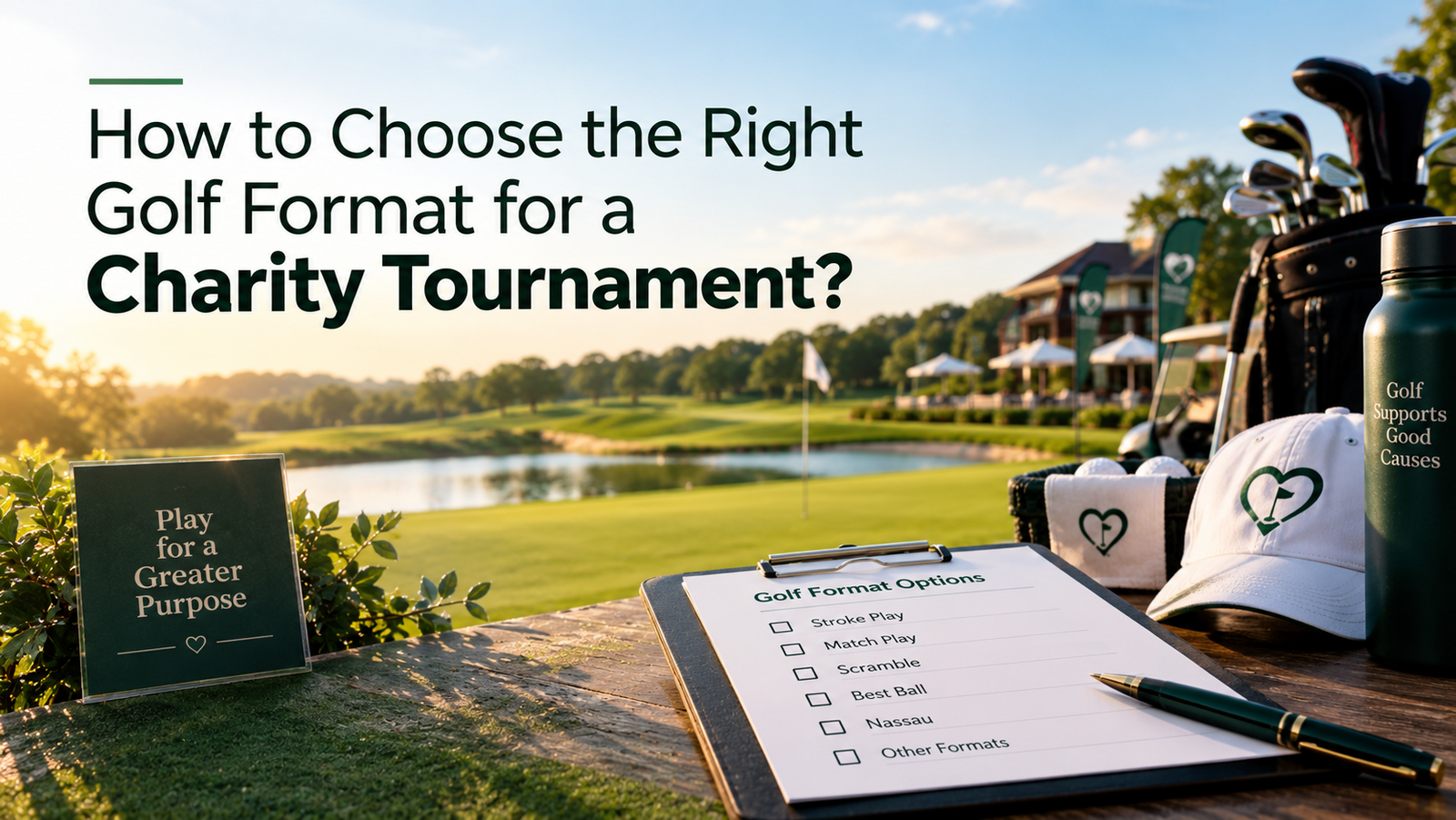
If you are planning a fundraiser, you are not just running a golf event. You are hosting donors, sponsors, volunteers, and a lot of people who play twice a year. This guide walks you through the popular formats, how each one behaves on the course, and how to pick the one that fits your crowd and your cause.
Most organizers spend weeks on sponsors, raffle prizes, and the lunch menu, then pick a format in about five minutes. That is a mistake. The format controls how fast people play, how much fun they have, and whether they sign up again next year. Think of it as the engine under the hood. A tournament is a fundraiser first, so the rules should serve your guests and your cause.
A good format lets a nervous beginner contribute and a confident player feel challenged. When guests leave saying "I actually helped our team," they remember the event fondly. When they feel like a burden, they quietly skip next year.
Slow rounds drain energy and push back your dinner, awards, and auction. Some formats naturally speed things up because one ball is in play. Others invite long searches and putts. Your format choice can easily add or remove an hour from the day.
Certain formats make it easy to sell mulligans, add side contests, and keep teams engaged on every hole. More engagement usually means more add-on spending. That is real money for your cause, not just a nice bonus.
Before you compare rules, look at who is actually coming. A charity field is rarely like a club championship. You might have a CEO who plays every weekend, a nurse who has not touched a club since college, and a sponsor rep who borrowed shoes that morning. The best format is the one that makes all three of them feel welcome from the first tee shot.
If your field ranges from scratch golfers to total beginners, choose a format where one good shot can lift the whole team. Scrambles do this beautifully. A beginner's one decent drive might become the team's best tee shot, and that feels fantastic.
Companies often buy a foursome to entertain clients. Many of those players are not golfers at all. Keep things simple, skip complicated scoring, and hand out a one-page rules sheet. Nobody wants to feel confused in front of a client.
If your event draws serious players, a pure scramble can feel too easy. They may want a bit more skill involved. A shamble or best ball gives them room to play their own game while still keeping the day social.
You do not need to invent anything new. A handful of proven formats cover nearly every charity event, and each has its own personality. Some are laid back. Some reward steady play. Knowing how each one works, and who it suits, makes the choice much easier. Here is a quick tour of the formats you will see most often.
Everyone hits, the team picks the best shot, and all four play from that spot. It repeats until the ball is holed. It is fast, forgiving, and easy to explain, which is why it dominates charity golf.
Each player plays their own ball the whole hole, and the lowest score on the team counts. It rewards consistent play but can slow things down, since every golfer finishes every hole. It works well for stronger fields.
A shamble starts like a scramble: everyone hits a tee shot and the team picks the best one. Then each player plays their own ball from there, and the best score counts. It blends teamwork with a little pressure.
A Texas scramble requires each player's drives to be used a set number of times, so no one gets carried. In a Florida scramble, the player whose shot is chosen sits out the next one. Both add fairness and strategy.
Partners take turns hitting the same ball in alternate shot. Chapman has both partners drive, swap balls for the second shot, then pick one ball and alternate. These are fun but can be tricky for beginners.
Stableford golf awards points instead of counting strokes. A bad hole costs you very little, so players keep going without feeling defeated. It is a lovely option for casual golfers who hate carding an eight.
|
Format |
Skill Fit |
Pace |
Best For |
|
Four-Person Scramble |
All levels |
Fast |
Most charity events |
|
Best Ball |
Mid to advanced |
Moderate |
Competitive fields |
|
Shamble |
Mixed |
Moderate |
Blend of fun and skill |
|
Texas Scramble |
Mixed |
Fast |
Stopping one player carrying the team |
|
Alternate Shot |
Advanced |
Fast |
Small, experienced groups |
|
Stableford |
Casual to mid |
Moderate |
Players who dread big numbers |
Your course and your timeline matter as much as your players. A gorgeous but brutal layout can punish beginners. A packed schedule can turn a leisurely round into a stressful one. Before locking in a format, talk with the golf pro or course manager. They have seen dozens of events on that property and know exactly where groups tend to get stuck.
A tough course with deep rough and fast greens works better with a scramble, since the team can avoid trouble. A short, friendly course gives you more freedom to try best ball or Stableford without dragging out the day.
Most charity events use a shotgun start so everyone begins and finishes together. That makes fast formats even more valuable. If you use staggered tee times, a slower format is easier to manage, though lunch timing gets harder.
Autumn events can lose light quickly, and summer afternoons can turn into thunderstorm roulette. If your schedule is tight or weather is uncertain, pick a format that finishes in about four to four and a half hours, and have a backup plan ready.
Charity tournaments live and die by what happens beyond the scorecard. The golf is the reason people show up, but the add-ons often drive the revenue. Some formats make those extras easier to sell. If your goal is to raise as much as possible, think about how the format lets you create small, fun moments to ask for support without feeling pushy.
Scrambles pair nicely with mulligan packages because a missed shot rarely hurts the team. You can also add longest drive, closest to the pin, or a putting contest. Each one is a simple, low-pressure way to raise extra funds.
Fast, social formats keep groups moving and give sponsors a lively crowd at their hole. Picture a local bank running a hole with a small prize. If teams are relaxed and smiling, they actually stop to chat and engage.
A format that finishes on schedule protects your evening program. Silent auctions and raffles do far better when guests arrive on time, fed, and in a good mood. A round that runs long means a tired, hungry audience.
If you are still torn, use a short checklist. It takes ten minutes and prevents most format regrets. Write down your honest answers, then see which format naturally rises to the top. You will usually find the decision is clearer than you expected.
What is the average skill level of your registered players?
How many hours can the round realistically take?
How hard is the course for a casual golfer?
Do you want a relaxed day or a competitive one?
Which add-ons do you plan to sell?
Mostly beginners, tight schedule, and a social vibe? Go with a scramble. Mostly experienced golfers who want a real contest? Try best ball or a shamble. A mix of both with a longer window? A Texas scramble or Stableford can keep everyone happy.
Sometimes the best way to understand a format is to picture it in action. These scenarios are typical of what organizers run into. Notice how the right choice depends on the people in the field, not on which format sounds fanciest. Your own event will probably look a bit like one of these.
Picture a hospital foundation with 120 guests, mostly staff, donors, and local business owners. Few play regularly. A four-person scramble with a shotgun start is the clear winner. Everyone contributes, rounds finish on time, and the dinner program starts without delay.
A youth club hosts parents and coaches, and several are decent golfers. A Texas scramble keeps the strong players from dominating while giving everyone a role. Add a closest to the pin contest, and suddenly even the quiet parents are cheering.
A firm invites clients and partners, many of whom play often and enjoy a bit of friendly rivalry. A shamble or best ball works well here. It rewards good golf, but the team element keeps the afternoon from feeling too serious.
Even experienced organizers slip up. Most mistakes come from trying to be clever or from forgetting how an average guest feels on the course. A little planning avoids the usual headaches. Here are the traps worth watching for, because each one can quietly hurt both the experience and your fundraising total.
You might love alternate shot, but that does not mean your guests will. Plan for the people attending, not for your own taste. The best format is the one your lowest handicap guest and your newest golfer can both enjoy.
If you need five minutes at the first tee to explain scoring, it is too complex. Keep it clear, and print simple rules on the cart or scorecard. Confused players slow down and enjoy the day less.
A tournament that runs two hours late costs you goodwill. Assign marshals, set a target time per hole, and choose a format that supports it. A fast scramble beats a slow best ball nearly every time at a large event.
There is no single perfect format for every charity tournament, but there is a perfect fit for yours. Start with your players, check your course and schedule, then think about how the format supports your fundraising. For most events, a four-person scramble is a safe and joyful choice. For stronger fields, a shamble or best ball adds a bit more edge.
Keep the rules simple, keep the pace brisk, and make sure every guest feels like part of the team. When people walk off the eighteenth green smiling, they are far more likely to give again, sign up next year, and bring a friend. That is the real win, on the course and for your cause.
The four-person scramble is the most popular choice. It is easy to understand, keeps play moving, and lets players of every skill level contribute. If your field is more competitive, a shamble or best ball can add a little extra challenge.
Most scrambles with a shotgun start finish in about four to four and a half hours for 18 holes. Course difficulty, group size, and how many contests you run can shift that time, so build in a small buffer.
A scramble is ideal because the team plays the best shot each time, which takes pressure off new golfers. Stableford is another friendly option since bad holes cost very little. Both keep beginners involved and relaxed.
A shotgun start is usually better for charity events because everyone begins and finishes together, which makes it easy to run lunch, awards, and auctions on schedule. Tee times can work for smaller events, but they spread out arrivals and complicate the program.
Pick a format that keeps play fast and social, then add extras like mulligans, closest to the pin, and longest drive. Scrambles pair well with these because mistakes are forgiving, so guests happily spend on add-ons.