Choose a test user to login and take a site tour.
To continue using the site you need to read the revised version and agree to the policies
Search in Photos
Search in Albums
Search in Members
Search in Articles
Search in Blogs
Search in Businesses
Search in Events
Search in Groups
Search in Listings
Search in Music Albums
Search in Music Songs
Search in Pages
Search in Questions
Search in Quotes
Search in Recepies
Search in Thoughts
Search in Videos
Search in Channels
Search in Wishes
Search in Prayers
Search in Discussions
Search in Products
Search in Jobs
Search in Products
17 minutes, 15 seconds
-31 Views 0 Comments 0 Likes 0 Reviews
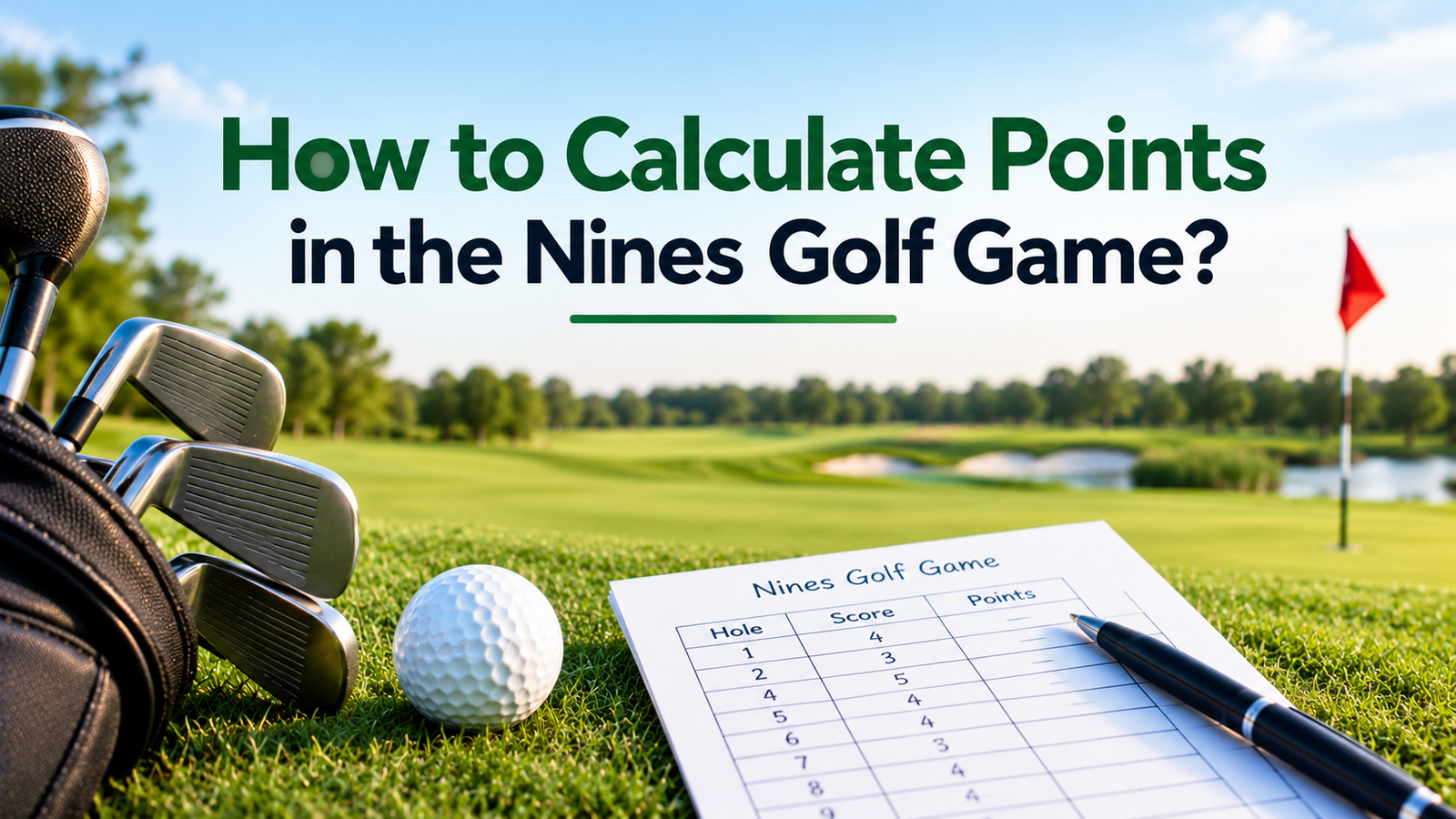
Picture the 7th tee on a lazy Saturday. Three friends are locked in a casual match, nobody is quite sure who is ahead, and someone is already arguing about how many points that last par was worth. Sound familiar?
That is exactly the moment the Nines golf game was built for. It keeps all three players in the hunt on every single hole, even when one of you has just carded a triple bogey. The scoring looks a little odd at first glance, but it usually clicks within two holes.
In this guide, I will walk you through how to calculate points in the Nines golf game, including tie situations, handicaps, a full nine hole scorecard, and the simple math for settling up at the end. Grab a pencil and a scorecard, and we will get started.
Nines, sometimes called Niners or the 9 point golf game, is a scoring and betting format built for exactly three golfers. Instead of just counting total strokes, you compete hole by hole for a pool of nine points. Whoever plays the hole best takes the biggest slice, and even the worst score on a hole still picks up a point. It rewards steady play, but it also rewards the occasional brilliant hole, which makes it far more forgiving than a standard stroke play match.
Nines works with three players, and that number matters because the points are designed to split neatly among three. You can play it over nine holes or a full eighteen. Most groups run it for the whole round and add everything up back at the clubhouse.
The big appeal is that nobody is ever out of it. A bad hole costs you a few points, not the whole match. It also keeps the pace lively, because every hole has something to play for, whether you are chasing five points or just protecting one.
Here is the heart of the game. On every hole, the three players split nine points based on how they scored. The lowest score takes the most, the highest score takes the least, and the numbers always add up to nine. Once you memorize the 5-3-1 split, everything else is just a small variation on it. Most golfers have it down by the third hole, so do not stress about the math.
The player with the best score on the hole earns 5 points. The middle score earns 3. The worst score earns 1. Say you make par, a friend makes bogey, and the third golfer makes a double. You collect 5, your friend collects 3, and the double bogey gets 1.
Five plus three plus one equals nine, and every tie split is built to match that total. Because each hole hands out exactly nine points, checking your math is easy. Nine holes produce 81 points across the group, and eighteen holes produce 162.
Ties are where most beginners get tripped up, but the logic is simple. The hole must still hand out nine points, so tied players share what they would have earned and the numbers are adjusted to stay whole. There are only three tie situations you will ever face, and they are covered below, followed by a quick reference table you can save for your next round.
When two golfers share the best score, each earns 4 points and the third player earns 1. Say you and a friend both make par, and the third player scrambles to a six. You each take 4, and he takes 1.
When one player wins the hole outright and the other two tie behind them, the winner earns 5 points and the tied players earn 2 each. A birdie for you and two bogeys for your playing partners means 5 for you and 2 apiece for them.
If everyone posts the same score, nobody gains an edge, so each golfer earns 3 points. Three pars on a par 3 means 3, 3, and 3. A halved hole keeps the totals balanced and the match tight.
Screenshot this and keep it on your phone. After a few holes you will not need it, but it settles the occasional green side debate faster than any rulebook.
| Situation on the hole | Points awarded |
|---|---|
| No ties (best, middle, worst) | 5, 3, 1 |
| Two players tie for first | 4, 4, 1 |
| Two players tie for second | 5, 2, 2 |
| All three players tie | 3, 3, 3 |
Scoring a hole in Nines takes about ten seconds once you build a routine. The trick is to compare scores in the same order every time, so you never skip a step when the group is tired and thinking about lunch. Follow the same short process on each hole and your scorecard stays clean from the first tee to the last putt.
Here is the routine most groups settle on. It is quick, and the final check in step five catches almost every mistake before it snowballs.
Take a par 4. Mike makes 4, Jake makes 5, and Tyler makes 6. Mike has the lowest score and takes 5 points, Jake takes 3, and Tyler takes 1. Now imagine Jake also made 4. Mike and Jake would take 4 each, and Tyler would still take 1.
Rules make more sense when you see them in motion, so here is a complete nine hole round between Mike, Jake, and Tyler. The number before each bracket is the stroke score, and the number inside the bracket is the points earned. Scores are gross to keep things simple. Watch how the lead changes hands more than once, which is exactly what makes Nines so much fun.
Read across each row and apply the tie table from earlier. Hole 2 is a good one to study, because Tyler wins outright while Mike and Jake tie behind him.
| Hole | Mike | Jake | Tyler | What happened |
|---|---|---|---|---|
| 1 | 4 (5) | 5 (3) | 6 (1) | No ties |
| 2 | 5 (2) | 5 (2) | 4 (5) | Mike and Jake tie for second |
| 3 | 4 (4) | 4 (4) | 5 (1) | Mike and Jake tie for first |
| 4 | 3 (5) | 4 (3) | 5 (1) | No ties |
| 5 | 6 (1) | 5 (4) | 5 (4) | Jake and Tyler tie for first |
| 6 | 4 (3) | 4 (3) | 4 (3) | Three way tie |
| 7 | 5 (3) | 6 (1) | 4 (5) | No ties |
| 8 | 4 (3) | 3 (5) | 5 (1) | No ties |
| 9 | 5 (1) | 4 (4) | 4 (4) | Jake and Tyler tie for first |
| Total points | 27 | 29 | 25 | 81 |
Add the final row: 27 plus 29 plus 25 equals 81, which matches nine points across nine holes. If your total comes up short or long, a hole was scored wrong somewhere. Go back and find it now, not at the 19th hole.
Points are fun, but most groups play Nines with a little something on the line. The settling up is easy once you know the benchmark. Every player is expected to earn an average share of the points, so you compare each total to that average and pay or collect the difference. You do not need a spreadsheet. A phone calculator and thirty seconds will do the job.
With nine points on every hole and three players, the average is 3 points per hole. That makes par 27 for nine holes and 54 for eighteen. Finish above par and you collect money. Finish below it and you pay out.
Subtract par from your total, then multiply by the agreed value per point. In our example at $1 a point, Mike finished on 27 and breaks even. Jake finished on 29, so he collects $2. Tyler finished on 25, so he pays $2.
Set the value per point on the first tee, not on the 18th green. Whether it is a dollar, a round of drinks, or just bragging rights, agreeing early avoids awkward conversations later. Many groups jot the stake at the top of the scorecard.
When your group has players of different abilities, handicaps keep the game fair. Nines works nicely with net scoring, where each golfer's strokes are adjusted before points are handed out. A 20 handicapper and a low single digit player can still battle for the same nine points on every hole, which is a big reason the format is so popular at weekend outings and casual trips.
Subtract any handicap stroke you receive on a hole from your gross score, then compare the net numbers. If Jake makes a 5 on a hole where he gets a stroke, his net score is 4. Award the points based on those net scores, not the gross ones.
A popular way to level things is to play off the lowest handicap in the group. The best player plays scratch, and the others receive the difference in strokes, used on the hardest holes first by stroke index. If you are a 10 and a friend is a 14, he gets 4 strokes.
Even experienced golfers slip up with Nines, usually when the group is chatting and the scorecard gets passed around without much attention. A few small habits can save you from a lot of disputes later. It also helps to know how groups adjust the game when the numbers do not line up, since not every group has exactly three golfers on the tee.
These four errors cause most scorecard arguments:
Nines is designed for three, so a foursome needs a house rule. Some groups rotate one player out every few holes, while others switch to a different format such as Skins. If you change the points, agree on the split before the first tee and write it down.
Calculating points in the Nines golf game comes down to one idea: every hole hands out nine points, and you divide them by score. Remember 5-3-1 when there are no ties, 4-4-1 when two players tie for first, 5-2-2 when two tie for second, and 3-3-3 when everyone matches. Check that each hole adds up to nine, compare your final total to par (27 for nine holes, 54 for eighteen), and settle up. Play a round or two and it will feel completely natural. The next time you stand on the first tee with two friends, suggest Nines and keep every hole meaningful from start to finish.
Nines is built for exactly three players. The nine points per hole divide cleanly among three golfers, which is why the 5-3-1 split works so well. With two or four players, you would need to change the points or pick another format.
Every hole awards nine points in total, shared among the three players. With no ties, the best score gets 5, the middle score gets 3, and the worst score gets 1. Ties change the split, but the total never changes.
Tied players share the points. If two players tie for the best score, they each get 4 and the third player gets 1. If two tie behind an outright winner, the winner gets 5 and the tied players get 2 each.
Compare each player's total to par, which is 27 points for nine holes or 54 for eighteen. Multiply the difference by the agreed value per point. Players above par collect, players below par pay, and the amounts always balance out to zero.
Yes, and it is a great way to keep the game fair. Convert gross scores to net scores using each player's handicap strokes, then award points based on the net results. Many groups play off the lowest handicap in the group.